
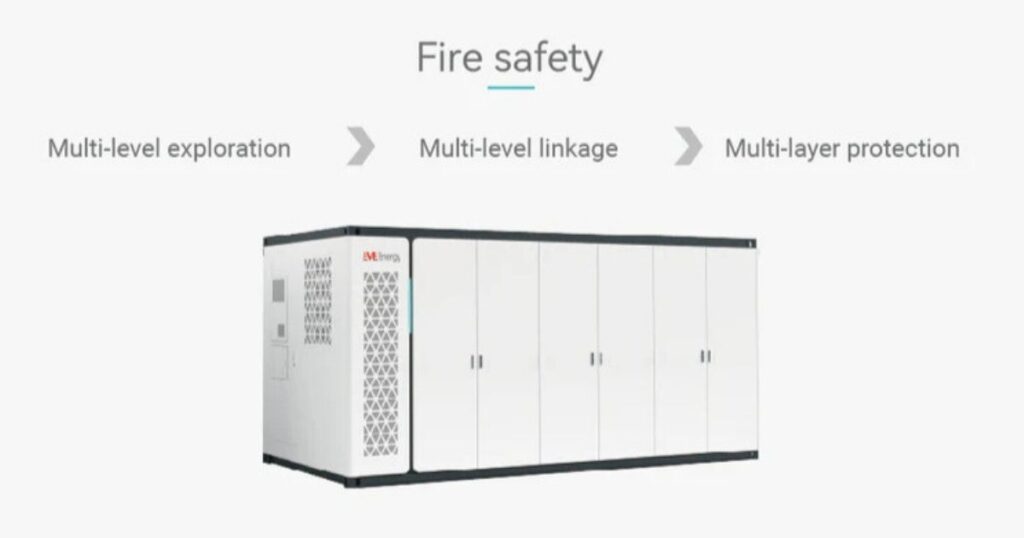
Fire safety is one of the most critical design considerations in Marine Battery Energy Storage Systems (Marine BESS / Marine ESS). Unlike conventional marine electrical systems, battery installations store large amounts of energy in confined spaces, introducing new fire and thermal runaway risks that must be carefully managed.
As Marine ESS adoption increases across hybrid vessels, electric ferries, offshore support vessels, and port craft—particularly in the Middle East—robust fire detection and suppression systems have become a mandatory requirement for safe and compliant deployment.
Why Fire Safety Is Critical in Marine BESS
Marine battery systems operate under conditions that significantly elevate fire risk if not properly engineered:
- Confined battery rooms or enclosures
- High energy density lithium-ion cells
- Limited access during emergency situations
- Continuous vessel operation
- Elevated ambient temperatures
A single battery failure can escalate rapidly without early detection and effective mitigation. For this reason, fire protection in Marine BESS is designed around early detection, controlled isolation, and containment, rather than suppression alone.
Fire Risk Mechanisms in Marine Battery Systems
The primary fire risk in lithium-ion Marine ESS is thermal runaway, which may be triggered by:
- Overcharging or over-discharging
- Internal cell defects
- Mechanical damage or vibration
- Cooling system failure
- High ambient temperatures
Once initiated, thermal runaway can propagate from one cell to adjacent cells if not detected and contained early.
Fire Detection Systems in Marine BESS
Early detection is the most important element of Marine BESS fire safety architecture. Modern systems use multi-layer detection strategies.
Gas Detection
Lithium-ion cells release gases during early failure stages, often before visible smoke or flame occurs.
Gas detection systems:
- Identify electrolyte vapors
- Provide early warning of cell failure
- Enable pre-emptive system shutdown
Gas detection is particularly valuable in enclosed battery rooms common on marine vessels.
Smoke and Heat Detection
Traditional smoke and heat detectors are still widely used but are typically combined with gas detection for enhanced reliability.
Their role includes:
- Confirming abnormal conditions
- Triggering alarms and system responses
- Activating suppression systems if required
Battery Management System (BMS) Integration
Fire detection systems are tightly integrated with the Battery Management System (BMS).
The BMS supports fire prevention by:
- Monitoring cell voltage and temperature
- Detecting abnormal behavior early
- Isolating faulty modules or strings
- Initiating controlled shutdown
A well-designed BMS can prevent many fire scenarios before suppression systems are ever required.
Fire Suppression and Mitigation Strategies
Unlike traditional engine-room fires, battery fires require specialized suppression approaches.
Fire Containment Philosophy
Marine ESS fire safety focuses on:
- Preventing fire propagation
- Protecting adjacent systems
- Maintaining vessel survivability
- Allowing safe crew evacuation
Complete extinguishment may not always be the immediate goal; controlled containment is often the primary objective.
Suppression Technologies Used in Marine BESS
Commonly applied systems include:
- Inert gas systems
- Aerosol-based suppression
- Water mist systems (application-dependent)
Each technology has advantages and limitations depending on:
- Battery chemistry (LFP vs NMC)
- Compartment design
- Classification requirements
- Vessel operating profile
The suppression system must be carefully matched to the battery technology and enclosure design.
Compartment Design and Fire Segregation
Fire protection is not limited to suppression systems alone. Battery room design plays a critical role.
Key design features include:
- Fire-rated enclosures and bulkheads
- Physical separation from critical ship systems
- Dedicated ventilation and exhaust paths
- Pressure relief and controlled venting
Classification societies place strong emphasis on passive fire protection measures in addition to active systems.
Classification Society Requirements
Fire detection and suppression systems are closely reviewed during Marine ESS classification approval.
Classification societies typically assess:
- Detection sensitivity and redundancy
- Suppression system suitability
- Integration with BMS and vessel alarms
- Failure containment strategy
- Emergency response logic
Approval requires comprehensive documentation, testing, and verification of fire safety performance.
Middle East Operating Considerations
Marine ESS installations in the Middle East face additional challenges:
- High ambient and sea temperatures
- Continuous vessel operation
- Increased thermal stress on batteries
- Stringent port and government safety expectations
As a result, fire detection and suppression systems must be designed with conservative safety margins and reliable performance under extreme environmental conditions.
Key Takeaway
Fire detection and suppression systems are not optional add-ons in Marine BESS—they are core safety components that define the overall integrity of the system. Effective Marine ESS fire protection relies on early detection, intelligent system response, and robust containment design, supported by proper integration with BMS and vessel systems.
As Marine BESS adoption grows, fire safety engineering will remain one of the most important success factors for compliant and reliable deployments.
If you are evaluating Marine ESS or Marine BESS solutions and require guidance on fire detection, suppression strategies, or classification compliance, you may contact Advandyn at [email protected] to discuss your project requirements.