
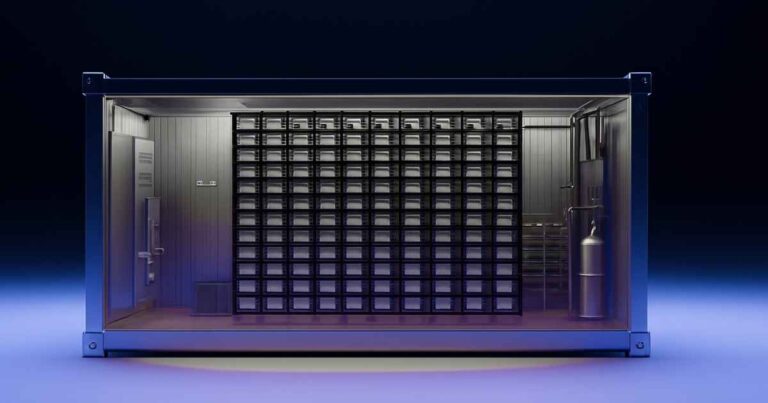
Thermal management is one of the most critical design elements in Marine Battery Energy Storage Systems (Marine BESS / Marine ESS). Battery performance, safety, and lifespan are directly influenced by temperature control, particularly in marine environments where batteries operate in confined spaces and under continuous load.
For vessels operating in hot and humid regions such as the Middle East, effective thermal management is not just a performance requirement—it is a safety and compliance necessity.
Why Thermal Management Is Critical in Marine ESS
Lithium-ion batteries operate optimally within a defined temperature range. Deviation from this range can lead to:
- Accelerated battery degradation
- Reduced usable capacity
- Increased internal resistance
- Elevated risk of thermal runaway
- Unplanned system shutdowns
Marine ESS installations face additional challenges compared to land-based systems, including limited ventilation, vibration, space constraints, and high ambient temperatures.
Thermal Challenges in Marine Environments
Marine battery systems are exposed to multiple thermal stress factors:
- High ambient temperatures, often exceeding 50°C
- Enclosed battery rooms or compartments
- Continuous cycling during hybrid operations
- Limited natural airflow
- Proximity to engines and auxiliary equipment
In Middle East operating conditions, these factors can significantly increase thermal load if not properly addressed at the system design stage.
Thermal Management Objectives in Marine BESS
A well-engineered thermal management system aims to:
- Maintain uniform cell temperatures
- Prevent localized hot spots
- Support high power charge and discharge rates
- Extend battery cycle life
- Enable safe operation under worst-case conditions
Thermal management must be integrated with Battery Management Systems (BMS) and vessel control systems to ensure real-time protection and response.
Air Cooling Systems for Marine ESS
Air cooling is typically used in smaller or lower-power marine ESS installations.
Characteristics of Air Cooling
- Simpler system architecture
- Lower initial cost
- Easier maintenance
Limitations
- Less effective in high ambient temperatures
- Limited heat transfer capability
- Sensitive to airflow obstructions
In hot climates, air-cooled systems may struggle to maintain uniform temperature across battery modules, increasing the risk of uneven aging.
Liquid Cooling Systems for Marine Battery Systems
Liquid cooling is the preferred thermal management strategy for most medium-to-large Marine BESS installations.
Advantages of Liquid Cooling
- Higher heat removal efficiency
- Uniform temperature control across cells
- Support for high power density systems
- Improved performance under extreme conditions
Liquid cooling systems typically use coolant circuits integrated with battery modules, supported by chillers or heat exchangers.
Hybrid Cooling Architectures
Some Marine ESS designs use hybrid cooling strategies, combining air and liquid cooling to balance performance and system complexity.
Hybrid systems may:
- Use liquid cooling at module level
- Employ air circulation for enclosure temperature control
- Provide redundancy for safety-critical applications
These architectures are increasingly used in vessels with variable load profiles and extended operating hours.
Integration with Battery Management System (BMS)
Thermal management does not operate independently. The BMS plays a central role in temperature control by:
- Monitoring cell and module temperatures
- Controlling cooling system activation
- Limiting charge/discharge rates when temperature thresholds are approached
- Triggering alarms or shutdowns during abnormal conditions
This integration ensures proactive thermal protection rather than reactive fault handling.
Redundancy and Fail-Safe Design
Marine ESS thermal systems must be designed with redundancy and fault tolerance, particularly for safety-critical vessels.
Key considerations include:
- Redundant pumps or fans
- Backup power supply for cooling systems
- Safe shutdown logic during cooling system failure
- Continuous temperature monitoring
Classification societies closely review thermal system redundancy during approval.
Thermal Management and Battery Chemistry Selection
Battery chemistry significantly influences thermal design requirements.
- LFP batteries offer higher thermal stability and tolerate wider temperature ranges
- NMC batteries require more aggressive cooling due to higher energy density and thermal sensitivity
In Middle East marine projects, thermal management strategies are often optimized alongside chemistry selection to balance safety, performance, and lifecycle cost.
Impact on Battery Life and Total Cost of Ownership
Effective thermal management directly improves:
- Battery cycle life
- Capacity retention
- System availability
- Long-term operating cost
Poor thermal design leads to premature degradation, frequent replacements, and increased downtime—negatively impacting project economics.
Compliance and Classification Considerations
Thermal management systems are evaluated as part of Marine ESS classification approval, including:
- Performance under maximum ambient temperature
- Cooling capacity at full system load
- Alarm and shutdown logic
- Integration with fire detection and safety systems
Documentation, testing, and verification are required to demonstrate compliance.
Relevance for Middle East Marine Applications
Marine ESS installations in the Middle East demand:
- Conservative thermal design margins
- Robust cooling under extreme climate conditions
- Proven performance during summer peak temperatures
Well-engineered thermal management is essential for reliable operation in ports, offshore vessels, ferries, and government fleets across the region.
Conclusion
Thermal management is a cornerstone of Marine BESS design, directly influencing safety, performance, and lifecycle cost. From air and liquid cooling strategies to BMS integration and redundancy planning, effective thermal control ensures that Marine ESS systems operate reliably under the most demanding conditions.
As marine electrification expands in hot-climate regions, thermal management will remain a defining factor in successful Marine BESS deployments.
If you are planning a Marine ESS or Marine BESS project and require guidance on thermal management design, system selection, or compliance considerations, feel free to contact [email protected] for technical discussions.