
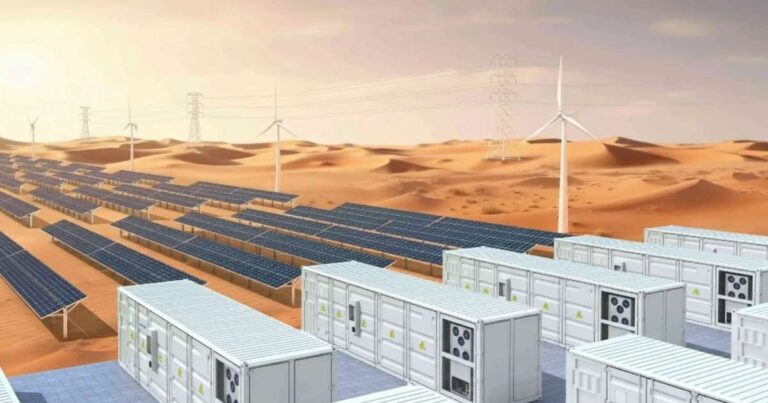
Driving Cost Efficiency, Energy Resilience, and Sustainable Industrial Growth
The Middle East is experiencing rapid industrial expansion alongside rising electricity demand, evolving tariff structures, and increasing sustainability commitments. In this environment, Industrial Energy Storage Systems (Industrial ESS / Industrial BESS) have become a critical tool for factories, processing plants, and infrastructure operators seeking cost control, power reliability, and energy independence.
This article explores the key applications of Industrial ESS in the Middle East, highlighting why battery energy storage is becoming a strategic asset across industrial sectors.
Why Industrial ESS Is Gaining Momentum in the Middle East
Industrial facilities in the Middle East face a unique combination of challenges:
- High electricity consumption in manufacturing and processing
- Rising energy tariffs and capacity-based charges
- Extreme ambient temperatures
- Rapid adoption of solar energy
- Grid constraints in expanding industrial zones
Industrial ESS provides a flexible, scalable solution to manage these challenges while supporting national sustainability and decarbonization goals.
1. Demand Charge Reduction for Industrial Facilities
One of the most widespread applications of industrial ESS in the Middle East is demand charge reduction.
By using battery energy storage to supply short-duration peak loads, factories can:
- Reduce maximum grid demand (kW)
- Lower monthly electricity bills
- Improve cost predictability
This application is particularly valuable for energy-intensive industries such as manufacturing, cement, metals, and logistics hubs.
2. Load Shifting and Tariff Optimization
In regions with time-of-use or tiered electricity tariffs, industrial ESS enables load shifting by storing energy during low-cost periods and deploying it during high-tariff hours.
Key benefits include:
- Reduced energy procurement costs
- Better alignment between production and energy pricing
- Improved energy budgeting and forecasting
Load shifting is especially effective when combined with onsite renewable generation.
3. Backup Power and Operational Resilience
Grid disturbances and outages can cause significant production losses for industrial operators. Industrial ESS provides instantaneous backup power, protecting critical processes and sensitive equipment.
Unlike diesel generators, battery systems deliver:
- Immediate response
- Stable voltage and frequency
- Silent and emission-free operation
This makes industrial ESS ideal for facilities requiring high uptime and power quality.
4. Renewable Energy Integration for Industrial Sites
The Middle East has one of the world’s highest solar energy potentials. Many factories are installing rooftop or ground-mounted solar systems to reduce energy costs.
Industrial ESS enables:
- Storage of excess solar generation
- Increased renewable utilization
- Reduced energy curtailment
- Improved return on solar investments
Solar-plus-storage systems are becoming a standard energy architecture for modern industrial facilities.
5. Industrial Microgrids and Energy Independence
Industrial ESS is a core component of industrial microgrids, particularly for:
- Large manufacturing campuses
- Ports and logistics zones
- Remote or grid-constrained industrial areas
Battery energy storage allows microgrids to operate independently during grid outages while optimizing energy flow under normal conditions.
6. Power Quality and Equipment Protection
Many industrial processes are sensitive to voltage fluctuations and frequency instability. Industrial ESS helps:
- Smooth power fluctuations
- Protect critical machinery
- Reduce equipment stress and downtime
This application is valuable for automated production lines and precision manufacturing.
7. Emission Reduction and Sustainability Compliance
Governments and industrial authorities across the Middle East are increasingly focused on:
- Emission reduction
- Energy efficiency
- ESG and sustainability reporting
Industrial ESS supports these objectives by reducing reliance on fuel-based backup generation and maximizing clean energy usage.
Design Considerations for Middle East Industrial ESS Projects
Successful industrial ESS deployments in the Middle East must account for:
- High ambient temperatures and thermal management
- Robust safety architecture
- Scalable and modular system design
- Compliance with local regulations and grid codes
Systems engineered for hot-climate operation deliver superior reliability and lifecycle performance.
Economic Value of Industrial ESS in the Middle East
Industrial ESS creates value through:
- Lower electricity costs
- Reduced demand charges
- Avoided production downtime
- Improved energy efficiency
- Enhanced asset protection
When properly designed and operated, battery energy storage offers strong return on investment for industrial users across the region.
Conclusion
Industrial Energy Storage Systems are transforming how factories and infrastructure facilities manage power in the Middle East. From demand charge reduction and load shifting to backup power and renewable integration, industrial ESS is becoming a foundational element of modern industrial energy strategies.
As energy systems evolve, battery energy storage will play an increasingly central role in supporting resilient, cost-effective, and sustainable industrial operations.
Talk to Advandyn
If you are exploring Industrial ESS or Industrial BESS solutions in the Middle East, or would like to assess applications, savings potential, and system design for your facility:

Our team supports industrial energy storage projects with application-driven engineering and proven technology partnerships.