
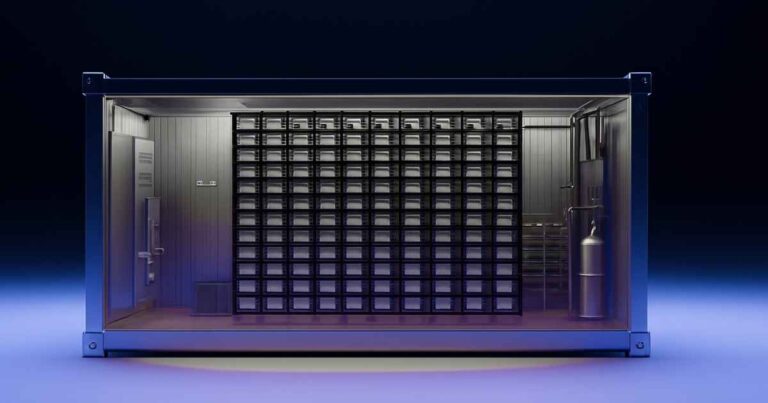
Safety is the most critical factor in the successful deployment of Industrial Energy Storage Systems (Industrial ESS / Industrial BESS). Unlike residential or small commercial systems, industrial ESS installations involve large battery capacities, high power levels, and continuous operation, making safety design a core engineering requirement rather than an optional feature.
For industrial facilities—especially in hot-climate regions such as the Middle East—robust safety architecture is essential to ensure operational reliability, regulatory compliance, and long-term asset protection.
Why Safety Design Is Critical in Industrial ESS
Industrial ESS installations introduce new risk profiles, including:
- High stored electrical energy
- Thermal runaway potential
- Electrical fault propagation
- Fire and gas release risks
- Integration with existing industrial infrastructure
Without proper safety design, these risks can impact personnel safety, production continuity, and facility compliance.
Site Selection and Layout Planning
Safety begins with proper site selection and physical layout.
Key considerations include:
- Adequate clearance from occupied buildings
- Separation from critical process equipment
- Controlled access to battery enclosures
- Compliance with local fire zoning regulations
For containerized industrial ESS, placement must allow safe ventilation, fire access, and emergency response.
Battery Chemistry and System Selection
Battery chemistry selection plays a significant role in safety performance.
- LFP-based industrial ESS offers higher thermal stability and lower fire propagation risk
- NMC-based systems require enhanced cooling and protection strategies
For many industrial applications—especially in high-temperature environments—chemistry selection directly influences safety complexity and approval requirements.
Thermal Management and Heat Control
Effective thermal management is a cornerstone of industrial ESS safety design.
Safety-focused thermal strategies include:
- Liquid cooling for high-power systems
- Redundant cooling circuits
- Temperature zoning within battery containers
- Continuous thermal monitoring
In Middle East installations, systems must be designed to operate safely under elevated ambient temperatures, often exceeding standard design assumptions.
Battery Management System (BMS) Safety Functions
The Battery Management System (BMS) is a primary safety control layer in industrial ESS.
Critical BMS safety functions include:
- Cell and module temperature monitoring
- Over-voltage and under-voltage protection
- Over-current limitation
- State of health tracking
- Automatic fault isolation and shutdown
A well-designed BMS prevents unsafe operating conditions before escalation occurs.
Fire Detection and Suppression Systems
Fire protection in industrial ESS installations requires a multi-layered approach.
Key safety elements include:
- Early gas and smoke detection
- Fire-rated battery enclosures
- Compartmentalization to prevent fire spread
- Suppression systems suited to battery fires
The safety philosophy focuses on early detection, controlled containment, and system isolation, rather than suppression alone.
Electrical Protection and Isolation
Electrical safety is essential in high-power industrial ESS installations.
Design considerations include:
- DC circuit breakers and contactors
- Pre-charge circuits to limit inrush currents
- Ground fault detection and insulation monitoring
- Emergency shutdown and isolation capability
These measures ensure faults are detected quickly and isolated safely.
Ventilation and Gas Management
Battery systems may release gases during abnormal conditions.
Safety-oriented ventilation design includes:
- Controlled airflow paths
- Gas exhaust routing away from personnel areas
- Pressure relief mechanisms
- Integration with detection and alarm systems
Proper ventilation reduces risk and supports safe emergency response.
Compliance with Codes and Standards
Industrial ESS safety design must comply with:
- Local electrical and fire codes
- Industrial safety regulations
- Utility interconnection requirements
- Authority having jurisdiction (AHJ) guidelines
Early engagement with regulatory bodies helps avoid redesign and approval delays.
Middle East–Specific Safety Considerations
Industrial ESS installations in the Middle East require additional attention due to:
- High ambient temperatures
- Dust and sand exposure
- Continuous industrial operation
- Increasing scrutiny from regulators and insurers
Systems engineered with conservative safety margins and robust environmental protection deliver higher reliability in these conditions.
Importance of Integrated Safety Engineering
Effective industrial ESS safety design is not achieved through individual components alone. It requires system-level engineering, where battery technology, thermal management, electrical protection, and control systems operate together as an integrated safety architecture.
Conclusion
Safety design is fundamental to the successful deployment of Industrial Energy Storage Systems. From site layout and battery chemistry selection to thermal management, fire protection, and electrical isolation, every design decision influences safety performance.
As industrial energy storage adoption grows, facilities that prioritize safety-driven ESS design will benefit from improved reliability, regulatory compliance, and long-term operational confidence.
Talk to Advandyn
If you are planning an Industrial ESS or Industrial BESS installation and need support on safety design, system architecture, or regulatory compliance, contact:

Our team supports industrial energy storage projects with application-driven engineering and safety-focused system design.