
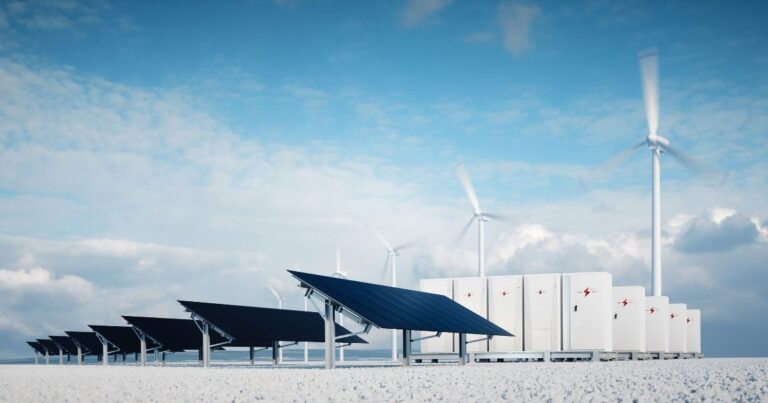
Maximizing Solar Utilization with Industrial ESS
Solar power adoption in industrial facilities is accelerating rapidly, particularly in regions with high solar irradiance such as the Middle East. However, without energy storage, solar generation alone cannot fully align with factory load profiles. Industrial Energy Storage Systems (Industrial ESS / Industrial BESS) enable factories to convert solar power into a reliable, dispatchable energy source that supports production, cost optimization, and energy resilience.
This article explains how industrial energy storage supports solar-driven factories, the key applications of ESS in solar-integrated industrial environments, and why battery storage is becoming a core component of modern industrial energy strategies.
The Challenge of Solar-Only Power in Industrial Facilities
Industrial operations typically follow fixed production schedules that do not always match solar generation profiles. Common challenges include:
- Peak solar generation during low production periods
- High energy demand outside daylight hours
- Solar curtailment due to grid export limits
- Voltage and power quality fluctuations
Without energy storage, factories are unable to fully utilize the solar energy they generate.
Role of Industrial ESS in Solar-Driven Factories
Industrial ESS acts as a bridge between solar generation and industrial loads. By storing excess solar energy and deploying it when needed, battery systems transform intermittent solar power into a stable and controllable energy resource.
Industrial ESS enables:
- Time-shifting of solar energy
- Reduced grid dependence
- Improved energy cost control
- Increased renewable utilization
Key Applications of Industrial ESS in Solar-Integrated Factories
Solar Energy Time-Shifting
Industrial ESS stores excess solar generation during daytime and discharges it during evening or night-time production hours. This allows factories to maximize self-consumption and minimize grid energy usage.
Load Smoothing and Power Stability
Battery storage smooths fluctuations caused by variable solar output, ensuring stable power supply to sensitive industrial equipment and automation systems.
Peak Demand Reduction
Solar-charged batteries support peak shaving by supplying power during high-demand periods, reducing demand charges and lowering electricity bills.
Backup Power and Solar-Supported Resilience
Industrial ESS provides backup power during grid outages, with solar energy contributing to extended operation without fuel dependency. This is especially valuable for facilities with critical production processes.
System Architecture for Solar-Driven Industrial ESS
A typical solar-integrated industrial ESS includes:
- Solar photovoltaic (PV) system
- Battery energy storage system (BESS)
- Battery Management System (BMS)
- Power Conversion System (PCS)
- Energy Management System (EMS)
The EMS optimizes energy flow between solar generation, battery storage, factory loads, and the grid.
Importance of Energy Management Systems (EMS)
The EMS is critical for maximizing solar-ESS performance by:
- Forecasting solar generation and load demand
- Prioritizing solar self-consumption
- Optimizing battery charging and discharging
- Managing grid import and export
Advanced EMS strategies significantly improve economic returns from solar-ESS systems.
Solar-Driven Factories in the Middle East
The Middle East offers exceptional solar resources, making solar-driven factories highly attractive. However, high ambient temperatures and industrial energy demand patterns require ESS solutions optimized for hot climates.
Industrial ESS designed for Middle East conditions enables:
- Higher solar utilization rates
- Reduced grid dependency
- Compliance with sustainability targets
- Improved energy resilience
Economic Benefits of Solar-Plus-Storage for Industry
Industrial ESS enhances solar project economics by:
- Increasing solar self-consumption
- Reducing peak energy costs
- Improving ROI of solar investments
- Avoiding energy curtailment losses
When combined with favorable solar economics, battery storage accelerates payback and improves long-term cost savings.
Design Considerations for Solar-Driven Industrial ESS
Successful projects require careful attention to:
- Battery sizing relative to solar capacity
- Thermal management for hot climates
- Control strategies for variable solar output
- Grid interconnection requirements
- Safety and compliance standards
Engineering solar-ESS systems as an integrated solution is essential for reliable performance.
Conclusion
Industrial Energy Storage Systems are a critical enabler for solar-driven factories. By converting intermittent solar generation into a reliable and controllable energy source, ESS allows industrial facilities to reduce energy costs, improve resilience, and meet sustainability goals.
As solar adoption continues to grow across industrial sectors, battery energy storage will become a standard component of factory-level energy infrastructure.
Talk to Advandyn
If you are planning a solar-driven factory or evaluating Industrial ESS or Industrial BESS solutions for solar integration, contact:

We support industrial energy storage projects with solar-integrated system design and hot-climate-optimized engineering.