
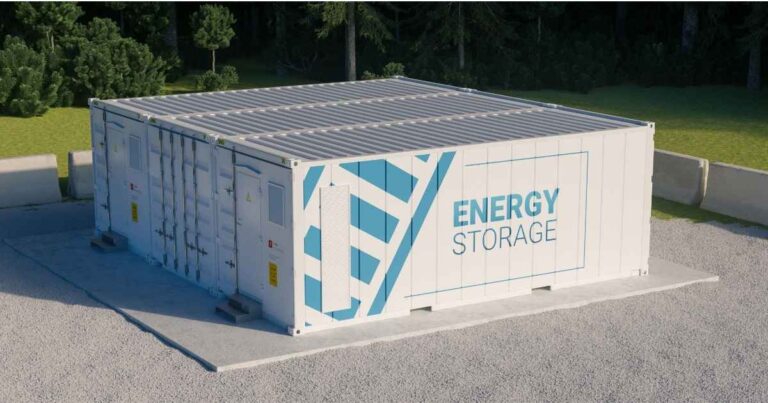
Evaluating the Financial Value of Battery Energy Storage for Industry
For industrial facilities, investment decisions are ultimately driven by return on investment (ROI) and payback period. While Industrial Energy Storage Systems (Industrial ESS / Industrial BESS) offer technical and operational benefits, their adoption increasingly depends on clear, quantifiable financial outcomes.
This article explains how ROI and payback are calculated for industrial ESS projects, the key value drivers, and why battery energy storage delivers strong financial performance for industrial users—especially in the Middle East.
Why ROI Matters for Industrial ESS Investments
Industrial ESS projects involve upfront capital expenditure, making financial justification essential. Decision-makers typically evaluate:
- Payback period
- Net cost savings over system life
- Risk reduction and operational value
- Long-term energy cost predictability
When properly designed, industrial ESS projects often transition from a cost item to a profit-enhancing asset.
Key Revenue and Cost-Saving Drivers in Industrial ESS
Demand Charge Reduction
Demand charge management is often the largest contributor to ESS ROI.
By shaving peak demand, industrial ESS reduces:
- Monthly capacity charges
- Penalty fees related to peak usage
Facilities with frequent short-duration peaks typically achieve rapid payback from this application alone.
Load Shifting and Tariff Optimization
Industrial ESS enables factories to:
- Store energy during low-tariff periods
- Use stored energy during high-tariff hours
This reduces overall electricity procurement costs and improves energy budget predictability.
Backup Power and Downtime Avoidance
The financial impact of power interruptions can be significant.
Industrial ESS helps avoid:
- Production losses
- Equipment damage
- Restart and scrap costs
While harder to quantify, downtime avoidance often represents a major hidden value component in ROI calculations.
Renewable Energy Optimization
For facilities with solar PV:
- ESS increases solar self-consumption
- Reduces grid import during peak pricing
- Improves solar project payback
Solar-plus-storage systems deliver higher combined returns than solar-only installations.
Typical Cost Components of Industrial ESS Projects
To evaluate ROI accurately, all cost elements must be considered:
- Battery energy storage system (BESS)
- Power conversion system (PCS)
- Energy management system (EMS)
- Thermal management and safety systems
- Installation and integration
- Operation and maintenance
Lifecycle costs, not just initial CAPEX, determine true project economics.
Calculating Payback Period for Industrial ESS
Payback period is typically calculated as:
Payback Period = Total Project Cost / Annual Net Savings
Annual savings may include:
- Reduced electricity bills
- Lower demand charges
- Reduced generator fuel and maintenance costs
- Avoided outage-related losses
In many industrial ESS projects, payback periods range from 3 to 7 years, depending on application mix and tariff structure.
Factors That Improve ROI and Shorten Payback
Industrial ESS projects deliver stronger ROI when:
- Demand charges are high
- Load profiles show frequent peaks
- Time-of-use tariffs are significant
- Solar generation is present
- Energy costs are rising
Combining multiple applications—such as demand charge reduction, load shifting, and backup power—significantly improves project economics.
Middle East Perspective on Industrial ESS ROI
In the Middle East, industrial ESS ROI is influenced by:
- Increasing electricity tariffs
- Capacity-based billing structures
- High industrial energy consumption
- Strong solar resource availability
- Grid constraints in industrial zones
As energy pricing becomes more dynamic, battery energy storage is emerging as a financially strategic investment, not just a sustainability initiative.
Risk Reduction and Strategic Value
Beyond direct cost savings, industrial ESS provides:
- Energy cost predictability
- Reduced exposure to grid instability
- Improved ESG and sustainability performance
- Future readiness for energy market changes
These strategic benefits strengthen the overall investment case, even when not fully reflected in simple payback calculations.
Importance of Proper System Design
ROI is highly sensitive to system sizing and control strategy.
Common pitfalls that reduce returns include:
- Oversized battery systems
- Poor load analysis
- Inadequate energy management logic
- Underutilization of ESS capabilities
A properly engineered ESS tailored to facility-specific needs is essential for achieving projected financial outcomes.
Conclusion
Industrial Energy Storage Systems offer a compelling financial case when evaluated through a comprehensive ROI and payback analysis. By reducing demand charges, optimizing energy costs, improving resilience, and enhancing renewable utilization, industrial ESS delivers measurable and sustainable economic value.
As energy costs rise and operational resilience becomes critical, battery energy storage is increasingly viewed as a strategic financial investment for industrial facilities.
Talk to Advandyn
If you are assessing the ROI and payback of an Industrial ESS or Industrial BESS project, or would like a facility-specific financial evaluation, contact:

We support industrial energy storage projects with application-driven engineering, techno-economic analysis, and hot-climate-optimized solutions.