
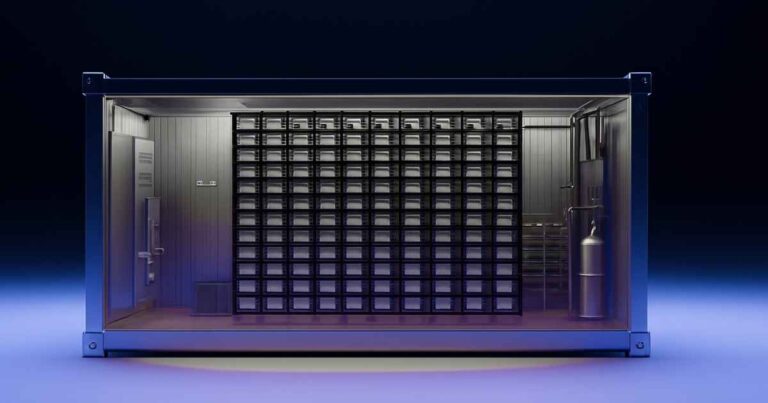
Battery degradation is one of the most important technical and economic considerations in Marine Energy Storage Systems (Marine ESS / Marine BESS). Unlike conventional marine equipment, battery systems are electrochemical assets whose performance gradually changes over time based on operating conditions, usage patterns, and environmental factors.
For marine vessels operating in demanding environments—particularly in hot and high-utilization regions such as the Middle East—effective battery lifecycle management is essential to ensure safety, reliability, and long-term return on investment.
Understanding Battery Degradation in Marine Applications
Battery degradation refers to the gradual reduction in usable capacity, power capability, and efficiency of a battery over its service life. In marine ESS, degradation directly impacts:
- Available propulsion or auxiliary power
- System reliability and redundancy
- Operating range and performance
- Replacement and lifecycle costs
Managing degradation is therefore a core part of Marine ESS engineering and operation.
Key Factors Driving Battery Degradation in Marine ESS
Temperature Effects
Temperature is one of the strongest drivers of battery aging. Elevated operating temperatures accelerate chemical reactions inside the cell, leading to faster capacity loss.
Marine ESS installed in:
- Enclosed battery rooms
- Engine room-adjacent spaces
- Hot climate regions
require robust thermal management to minimize temperature-induced degradation.
Depth of Discharge (DoD)
Frequent deep discharge cycles significantly reduce battery life.
- High DoD → faster capacity fade
- Shallow cycling → extended battery life
Marine ESS is often designed to operate within controlled DoD windows to balance performance and longevity, especially for hybrid propulsion and peak shaving applications.
Charge and Discharge Rates (C-Rate)
High charge and discharge rates increase internal stress on battery cells.
In marine vessels, rapid load changes during:
- Maneuvering
- Thruster operation
- Dynamic positioning
must be carefully managed through Battery Management Systems (BMS) and system-level control to limit excessive C-rates.
Cycling Frequency and Duty Profile
Marine vessels often experience:
- Frequent short cycles
- Partial charge–discharge events
- Irregular duty profiles
While modern lithium-ion batteries tolerate partial cycling well, improper system design can still accelerate degradation if cycling behavior is not optimized.
Role of Battery Management Systems (BMS) in Lifecycle Control
The Battery Management System plays a central role in monitoring and managing degradation.
Key BMS functions related to lifecycle management include:
- State of Charge (SoC) control
- State of Health (SoH) estimation
- Temperature and current limitation
- Cell balancing
- Fault detection and data logging
Advanced BMS algorithms help ensure batteries operate within safe and optimal limits throughout their lifecycle.
Thermal Management and Its Impact on Battery Life
Effective thermal management directly influences battery longevity.
Well-designed thermal systems:
- Maintain uniform cell temperatures
- Prevent localized hot spots
- Reduce degradation rate
- Improve performance consistency
In Middle East marine operations, liquid-cooled ESS architectures are often preferred to maintain stable temperatures under high ambient conditions.
Battery Chemistry and Degradation Characteristics
Battery chemistry selection significantly affects lifecycle behavior.
- LFP batteries typically offer longer cycle life and better thermal stability
- NMC batteries provide higher energy density but are more sensitive to temperature and cycling stress
For many commercial marine applications, especially in hot climates, LFP chemistry offers advantages in lifecycle stability and total cost of ownership.
Operational Strategies to Extend Marine ESS Lifetime
Lifecycle management is not only a design issue—it also depends on how the system is operated.
Effective strategies include:
- Operating batteries within defined SoC windows
- Avoiding prolonged high-temperature exposure
- Limiting unnecessary high-power transients
- Coordinating battery use with generator operation
- Regular system monitoring and diagnostics
Energy Management Systems (EMS) play a key role in optimizing daily battery usage patterns.
Predictive Maintenance and Condition Monitoring
Modern Marine ESS platforms enable predictive maintenance through continuous data analysis.
Benefits include:
- Early identification of abnormal degradation trends
- Proactive maintenance planning
- Reduced risk of unexpected failures
- Improved fleet reliability
Remote monitoring is particularly valuable for fleets operating across wide geographic regions.
End-of-Life Planning and Lifecycle Cost Management
Battery lifecycle management also includes planning for:
- Capacity fade over time
- Performance derating
- Replacement or repurposing
- Recycling and disposal
Understanding degradation behavior allows operators to plan replacements proactively and avoid operational disruptions.
Middle East Considerations for Marine ESS Lifecycle Management
Marine ESS projects in the Middle East must account for:
- High ambient and sea temperatures
- Extended operating hours
- High utilization in port and offshore operations
Systems designed with conservative thermal margins, robust BMS control, and appropriate chemistry selection deliver longer service life and improved economic performance under these conditions.
Conclusion
Battery degradation is a natural process, but its impact on Marine ESS performance and economics can be effectively managed through proper system design, intelligent control, and optimized operation. Lifecycle management is therefore a core success factor for any marine energy storage project.
As marine electrification continues to expand, understanding and managing battery degradation will be essential for delivering safe, reliable, and cost-effective Marine ESS solutions.
If you are planning a Marine ESS or Marine BESS project and would like support on battery lifecycle management, system design, or operational optimization, you may please contact [email protected] for technical discussions.