
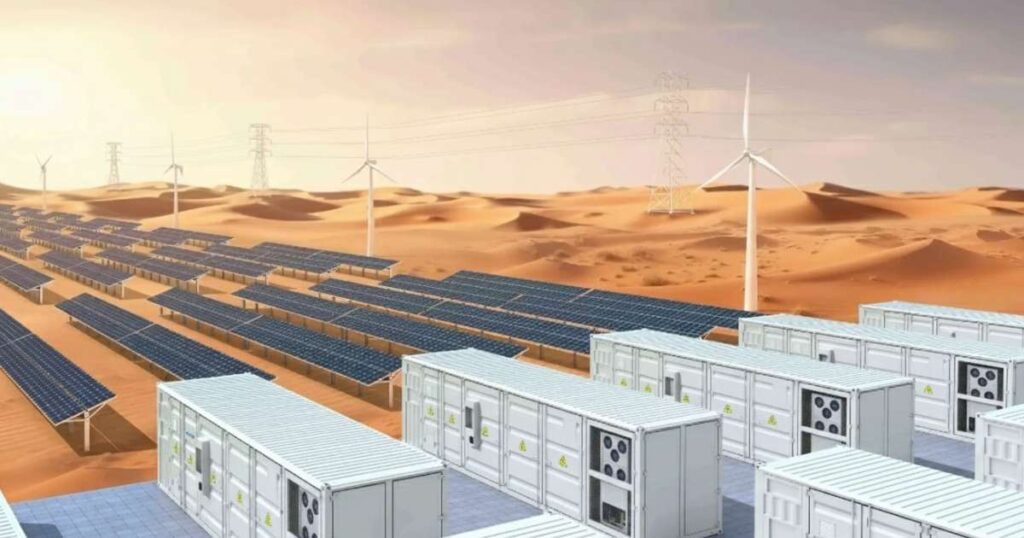
The Middle East is undergoing a rapid transformation in how energy is generated, distributed, and consumed. With ambitious decarbonization targets, large-scale renewable deployments, and growing industrial demand, Energy Storage Systems (ESS) and Battery Energy Storage Systems (BESS) have become a critical enabler of the region’s energy transition.
This article explores the key ESS applications in the Middle East, highlighting why energy storage is no longer optional—but essential.
Why Energy Storage Is Critical in the Middle East
The region faces a unique combination of challenges and opportunities:
-
- High solar generation potential
-
- Extreme ambient temperatures
-
- Rapid industrialization and urban growth
-
- Grid stability challenges during peak demand
-
- Strong government-driven sustainability initiatives
ESS bridges the gap between renewable energy generation, grid reliability, and energy security, making it a cornerstone of modern power systems.
1. Renewable Energy Integration (Solar + ESS)
Solar power dominates renewable investments across the Middle East. However, solar generation is inherently intermittent—producing energy only during daylight hours.
ESS enables:
-
- Storage of excess daytime solar generation
-
- Dispatch of clean energy during evening and night hours
-
- Improved solar plant utilization and stability
-
- Reduced reliance on fossil-fuel peaking plants
Solar-plus-storage systems are now a preferred architecture for utility-scale, industrial, and commercial renewable projects across the region.
2. Peak Shaving & Load Management for Industrial Facilities
Industrial electricity tariffs in many Middle Eastern countries are influenced by peak demand charges. ESS allows industries to actively manage their load profile.
Key benefits:
-
- Reducing peak grid demand
-
- Lower electricity costs
-
- Improved energy efficiency
-
- Optimized generator operation
ESS is widely applied in factories, refineries, cement plants, ports, and large commercial facilities.
3. Grid Support & Stability Services
As renewable penetration increases, grid operators require fast-responding assets to maintain stability.
ESS provides critical grid services such as:
-
- Frequency regulation
-
- Voltage stabilization
-
- Ramp-rate control
-
- Short-term spinning reserve replacement
Utility-scale BESS installations are increasingly deployed to strengthen national grids and support renewable expansion.
4. Backup Power & Energy Resilience
Grid interruptions, even short ones, can have serious consequences for critical infrastructure.
ESS is used for backup power in:
-
- Industrial control systems
-
- Ports and logistics hubs
-
- Data centers and telecom facilities
-
- Healthcare and public infrastructure
Unlike conventional generators, ESS delivers instantaneous, silent, and emission-free backup power.
5. Microgrids & Off-Grid Applications
Remote locations and islanded operations are common in the Middle East, including oil & gas facilities, desert industries, and coastal assets.
ESS enables:
-
- Hybrid microgrids with solar, wind, and generators
-
- Reduced fuel consumption
-
- Improved system reliability
-
- Autonomous operation during grid outages
Microgrid-based ESS solutions are particularly valuable in remote and mission-critical environments.
6. Marine & Port Energy Storage Applications
Ports and maritime operations are increasingly under pressure to reduce emissions.
Marine and port-side ESS supports:
-
- Zero-emission harbor operations
-
- Shore power solutions
-
- Hybrid and electric vessel propulsion
-
- Peak shaving for onboard power systems
Energy storage plays a growing role in decarbonizing marine infrastructure across the region.
7. EV Charging Infrastructure Support
As electric mobility adoption grows, high-power EV charging places stress on local grids.
ESS helps by:
-
- Buffering high-power charging loads
-
- Reducing grid upgrade requirements
-
- Enabling fast charging in constrained locations
-
- Supporting fleet and public charging hubs
This application is particularly relevant for logistics fleets, ports, and urban developments.
Key Design Considerations for Middle East ESS Projects
When deploying ESS in the Middle East, system design must account for:
-
- High ambient temperatures
-
- Robust thermal management
-
- Long cycle life and degradation control
-
- Advanced safety architecture
-
- Compliance with regional regulations
Well-engineered ESS solutions are essential to ensure reliability and long-term performance.
The Future of ESS in the Middle East
Energy storage is transitioning from a supporting technology to a core infrastructure asset. Future developments will see:
-
- Larger utility-scale BESS deployments
-
- Greater integration with renewable megaprojects
-
- Increased adoption in marine and industrial sectors
-
- Smarter, AI-driven energy management systems
ESS will remain central to achieving energy security, sustainability, and economic efficiency in the region.
Conclusion
From renewable integration and industrial optimization to grid stability and marine decarbonization, ESS applications in the Middle East are expanding rapidly. Energy storage is no longer just about backup power—it is about enabling smarter, cleaner, and more resilient energy systems.
Want to explore ESS solutions for your project?
Contact Advandyn to discuss tailored ESS and BESS solutions for marine, industrial, and utility applications in the Middle East.
Email: [email protected]