
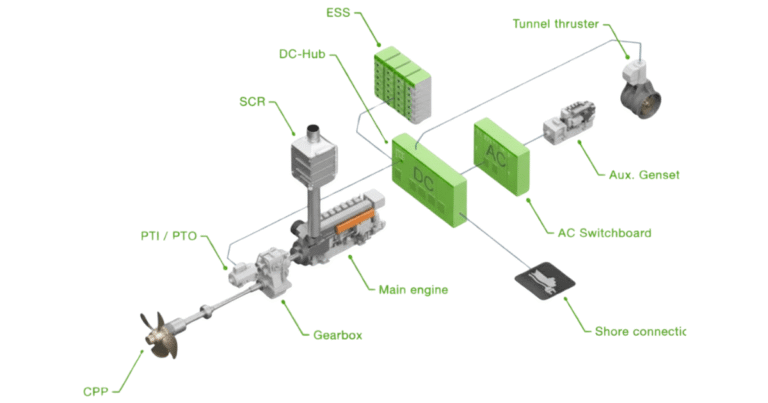
Hybrid marine propulsion systems are rapidly becoming a preferred solution for shipowners seeking improved fuel efficiency, reduced emissions, and enhanced operational flexibility. At the core of these systems is Battery Energy Storage Systems (BESS), which enable intelligent power sharing between conventional engines and electric propulsion components.
Across commercial vessels, offshore units, and port craft—particularly in the Middle East—hybrid propulsion supported by Marine ESS is emerging as a practical pathway toward decarbonization without compromising reliability.
What Is Hybrid Marine Propulsion?
Hybrid marine propulsion combines internal combustion engines (diesel or gas) with electric propulsion systems powered by batteries. Instead of relying solely on engines for all operating conditions, power demand is optimized using a combination of generators, batteries, and power electronics.
Marine BESS acts as a flexible energy buffer, absorbing load fluctuations and supplying power when engines operate inefficiently.
Role of Battery Energy Storage in Hybrid Propulsion
In hybrid vessels, Marine ESS performs multiple critical functions:
- Supplies instant power during transient loads
- Enables engine downsizing and optimized operation
- Reduces generator start-stop cycles
- Supports battery-only operation in specific modes
The integration of BESS allows vessels to operate engines closer to their optimal efficiency range, reducing fuel consumption and emissions.
Operating Modes Enabled by Marine BESS
Hybrid marine propulsion systems typically support multiple operating modes depending on vessel activity.
Battery-Only Mode
During low-speed operations such as harbor maneuvering or standby, the vessel can operate solely on battery power, enabling zero-emission and silent operation.
Hybrid Mode
Batteries and generators operate together, with the ESS handling peak loads while engines provide base power. This mode is commonly used during acceleration and dynamic operations.
Generator-Optimized Mode
Engines run at optimal load while excess power is stored in batteries. This improves fuel efficiency and reduces engine wear.
Key Benefits of Hybrid Marine Propulsion with ESS
Fuel Efficiency and Emission Reduction
Hybrid propulsion significantly reduces:
- Fuel consumption
- CO₂ emissions
- NOₓ and particulate emissions
This is especially beneficial for vessels with frequent load changes or long idle periods.
Reduced Engine Wear and Maintenance
By minimizing low-load engine operation, hybrid systems:
- Extend engine service intervals
- Reduce maintenance costs
- Improve overall system reliability
Battery energy storage absorbs rapid load changes that would otherwise stress generators.
Improved Operational Flexibility
Marine ESS enables vessels to adapt to different operational requirements without compromising performance. Operators can switch seamlessly between operating modes based on mission needs.
Applications of Hybrid Marine Propulsion
Hybrid propulsion systems supported by Marine BESS are widely adopted in:
- Tugboats and harbor vessels
- Ferries and passenger craft
- Offshore support vessels
- Patrol and government vessels
- Service and utility vessels
These vessels benefit from high-duty cycles and variable load profiles ideally suited for battery-assisted propulsion.
Integration with Power and Energy Management Systems
Hybrid marine propulsion relies on tight integration between:
- Battery Management Systems (BMS)
- Power Management Systems (PMS)
- Energy Management Systems (EMS)
These systems coordinate power flow, ensure safe operation, and optimize energy usage in real time. Effective integration is essential for classification compliance and operational safety.
Middle East Perspective on Hybrid Marine Propulsion
Ports and maritime authorities across the Middle East are increasingly focused on:
- Emission reduction in coastal and port areas
- Fuel efficiency improvements
- Sustainable maritime operations
Hybrid marine propulsion with ESS aligns well with regional sustainability initiatives, particularly in high-temperature environments where efficient load management is critical.
Design Considerations for Hybrid Marine ESS
Successful hybrid propulsion projects require careful attention to:
- Battery sizing and chemistry selection
- Thermal management and cooling systems
- Redundancy and safety architecture
- Integration with existing propulsion equipment
- Classification society requirements
Early system-level engineering is key to avoiding integration challenges during commissioning.
Conclusion
Hybrid marine propulsion systems powered by Battery Energy Storage represent a mature and practical solution for reducing emissions, improving fuel efficiency, and enhancing vessel performance. By intelligently combining engines and batteries, Marine ESS enables vessels to operate more efficiently across a wide range of operating conditions.
As the maritime industry continues its transition toward cleaner operations, hybrid propulsion supported by Marine BESS will play a central role in shaping the future of marine energy systems.
If you are evaluating hybrid marine propulsion systems or require technical support for Marine ESS and BESS integration, feel free to contact [email protected] to discuss your project requirements.