
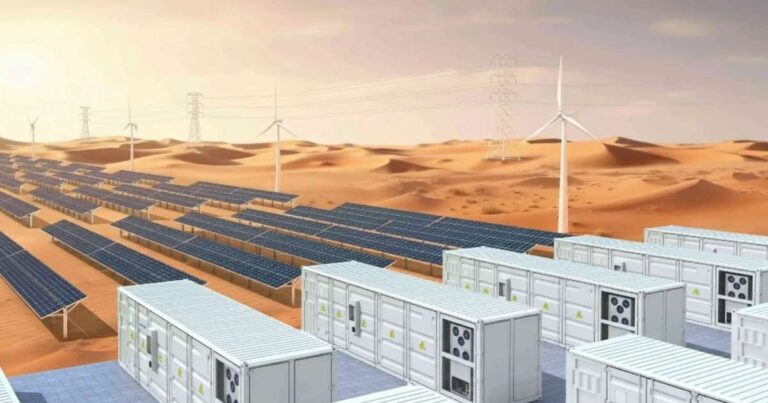
Engineering Battery Energy Storage Systems for Reliable Hot-Climate Operation
Industrial Energy Storage Systems (Industrial ESS / Industrial BESS) deployed in high ambient temperature regions face operating conditions that are significantly more demanding than those in temperate climates. In regions such as the Middle East, where ambient temperatures regularly exceed 50°C, ESS design must go beyond standard configurations to ensure safety, reliability, and long-term performance.
This article explores key design considerations for Industrial ESS in high-temperature environments, highlighting engineering strategies required for successful deployment in hot climates.
Why High Ambient Temperature Is a Critical Design Challenge
Battery energy storage systems are sensitive to temperature. Prolonged exposure to high ambient heat can result in:
- Accelerated battery degradation
- Reduced available capacity
- Increased internal resistance
- Higher thermal runaway risk
- Frequent system derating or shutdown
For industrial users relying on ESS for cost optimization, backup power, or renewable integration, poor thermal design directly impacts uptime and return on investment.
Understanding the Hot-Climate Operating Environment
High ambient temperature regions introduce multiple stress factors for industrial ESS:
- Daytime temperatures above 45°C
- High solar radiation on outdoor enclosures
- Limited nighttime temperature relief
- Dust and sand accumulation
- Continuous industrial operation
ESS systems designed for mild climates often underperform or fail prematurely when exposed to these conditions without adaptation.
Battery Chemistry Selection for High-Temperature Regions
Battery chemistry plays a major role in hot-climate ESS design.
- LFP (Lithium Iron Phosphate) batteries offer higher thermal stability, longer cycle life, and lower fire risk
- NMC (Nickel Manganese Cobalt) batteries provide higher energy density but require more aggressive thermal control
For many industrial ESS projects in high ambient temperature regions, LFP chemistry is preferred due to its inherent thermal robustness and safety margin.
Advanced Thermal Management Strategies
Thermal management is the foundation of hot-climate ESS design.
Liquid Cooling as the Preferred Approach
For medium to large industrial ESS installations, liquid cooling is widely adopted due to:
- Superior heat transfer efficiency
- Uniform temperature control across battery modules
- Support for high power operation
- Reduced sensitivity to ambient air temperature
Liquid cooling ensures stable battery performance even during extreme summer conditions.
Redundant Cooling Architecture
High-temperature ESS installations should include:
- Redundant pumps and cooling circuits
- Backup power supply for thermal systems
- Fail-safe derating or shutdown logic
Redundancy is increasingly required by insurers, regulators, and project financiers.
Enclosure and Container Design Considerations
Industrial ESS enclosures must be engineered to minimize heat ingress.
Key design features include:
- Insulated and reflective container surfaces
- Reduced solar heat absorption
- Controlled airflow and ventilation paths
- Dust and sand ingress protection
Proper enclosure design reduces cooling demand and improves overall system efficiency.
Role of Battery Management System (BMS)
The Battery Management System (BMS) is critical in hot-climate ESS installations.
BMS functions include:
- Continuous temperature monitoring
- Dynamic charge and discharge limitation
- Coordination with cooling systems
- Early fault detection and alarm generation
Advanced BMS algorithms help prevent unsafe operation during extreme thermal conditions.
Power Electronics and Component Selection
High ambient temperature affects not only batteries but also power electronics.
Design considerations include:
- High-temperature rated components
- Adequate ventilation for inverters and converters
- Thermal separation between batteries and PCS equipment
Component derating under high temperatures must be accounted for during system sizing.
Safety and Compliance in Hot-Climate ESS Installations
Industrial ESS in high ambient temperature regions must comply with:
- Local electrical and fire safety regulations
- Utility interconnection requirements
- Insurer and authority having jurisdiction (AHJ) expectations
Systems designed specifically for hot climates are more likely to achieve smooth approvals and long-term insurability.
Middle East–Specific Design Best Practices
Industrial ESS projects in the Middle East benefit from:
- Conservative thermal design margins
- Climate-optimized cooling solutions
- Proven hot-climate reference designs
- Continuous performance monitoring
Designing for worst-case environmental conditions ensures reliable year-round operation.
Impact on Lifecycle Cost and Reliability
Proper hot-climate ESS design delivers:
- Extended battery lifespan
- Reduced maintenance costs
- Higher system availability
- Improved total cost of ownership
Underestimating thermal challenges often leads to premature degradation and unexpected replacement costs.
Conclusion
Designing Industrial Energy Storage Systems for high ambient temperature regions requires a holistic engineering approach that addresses battery chemistry, thermal management, enclosure design, control systems, and safety architecture. In hot climates such as the Middle East, temperature-driven design decisions are critical to ensuring safe, reliable, and economically viable ESS operation.
As industrial ESS adoption accelerates globally, climate-optimized system design will be a defining success factor for projects in high-temperature environments.
Talk to Advandyn
If you are planning an Industrial ESS or Industrial BESS project in a high ambient temperature region, and require support with system design, thermal engineering, or technology selection, contact:

We support industrial energy storage projects with hot-climate-optimized engineering and application-driven solutions.