
Enabling Energy Independence, Reliability, and Cost Optimization
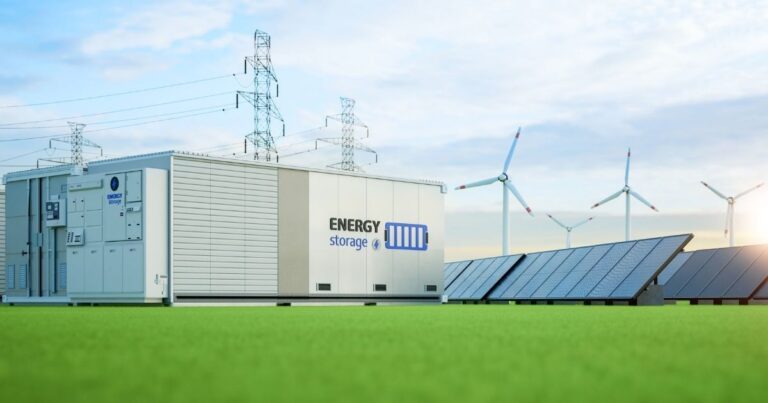
As industrial facilities face rising energy costs, grid constraints, and reliability challenges, industrial microgrids using Battery Energy Storage Systems (Industrial ESS / Industrial BESS) are becoming a strategic solution. By integrating batteries with onsite generation and intelligent controls, industrial microgrids enable facilities to operate efficiently, resiliently, and independently from the main grid when required.
This article explains how industrial microgrids work, the role of battery energy storage within them, and why they are gaining strong adoption across industrial sites in the Middle East.
What Is an Industrial Microgrid?
An industrial microgrid is a localized energy system that integrates:
- Grid connection
- Onsite generation (such as solar PV or generators)
- Battery energy storage
- Intelligent control systems
The microgrid can operate in grid-connected mode or islanded mode, supplying power to industrial loads even during grid disturbances.
Role of Battery Energy Storage in Industrial Microgrids
Battery Energy Storage Systems are the backbone of modern industrial microgrids. Industrial ESS enables:
- Instantaneous power response
- Load balancing and stabilization
- Seamless transition between grid-connected and islanded operation
- Optimization of energy sources
Without battery storage, microgrids struggle to maintain stability and flexibility.
Key Functions of Industrial ESS in Microgrids
Grid Support and Load Balancing
Industrial ESS smooths load variations and stabilizes voltage and frequency, ensuring reliable power delivery to sensitive industrial processes.
Islanded Operation and Black Start Capability
During grid outages, battery systems enable:
- Seamless islanding
- Immediate power availability
- Support for black start and system recovery
This capability is critical for facilities requiring uninterrupted operation.
Renewable Energy Integration
Industrial microgrids often include solar generation. ESS stores excess renewable energy and dispatches it when generation is low, enabling higher renewable penetration without compromising stability.
Peak Demand and Cost Management
Battery storage supports peak shaving, load shifting, and tariff optimization within the microgrid, reducing overall energy costs while maintaining operational flexibility.
Typical Applications of Industrial Microgrids
Industrial microgrids with battery energy storage are widely used in:
- Manufacturing plants and industrial campuses
- Ports and logistics hubs
- Process industries
- Remote or grid-constrained industrial sites
- Government and critical infrastructure facilities
These applications benefit from high energy resilience and controllable power supply.
Control Systems and Energy Management
Effective industrial microgrids rely on advanced Energy Management Systems (EMS) that coordinate:
- Battery dispatch
- Generator operation
- Renewable energy utilization
- Grid interaction
The EMS ensures optimal energy flow, safe operation, and economic performance under all operating conditions.
Industrial Microgrids in the Middle East
The Middle East presents strong drivers for industrial microgrids:
- High industrial energy demand
- Rapid expansion of industrial zones
- Increasing solar adoption
- Grid constraints in certain regions
- Growing focus on energy security and sustainability
Battery-supported microgrids enable industrial operators to reduce grid dependence while improving reliability in hot-climate environments.
Design Considerations for Industrial Microgrids
Successful microgrid projects require careful engineering, including:
- Battery sizing for power and energy needs
- Thermal management for high ambient temperatures
- Protection and synchronization strategies
- Compliance with local grid codes and regulations
- Scalability for future expansion
System-level design is essential to ensure stable and safe operation.
Economic and Operational Benefits
Industrial microgrids using battery energy storage deliver:
- Improved energy reliability and uptime
- Reduced electricity costs
- Lower demand charges
- Enhanced renewable utilization
- Increased operational independence
These benefits make microgrids an attractive long-term investment for industrial facilities.
Conclusion
Industrial microgrids powered by Battery Energy Storage Systems represent a modern approach to industrial energy management. By combining energy storage with onsite generation and intelligent controls, microgrids provide reliable, flexible, and cost-effective power solutions for industrial operations.
As energy challenges evolve, battery-enabled industrial microgrids will play a central role in shaping resilient and sustainable industrial infrastructure.
Talk to Advandyn
If you are evaluating industrial microgrids using battery energy storage, or planning an Industrial ESS or Industrial BESS project, contact:

We support industrial microgrid projects with application-driven engineering, system integration expertise, and hot-climate-optimized solutions.