
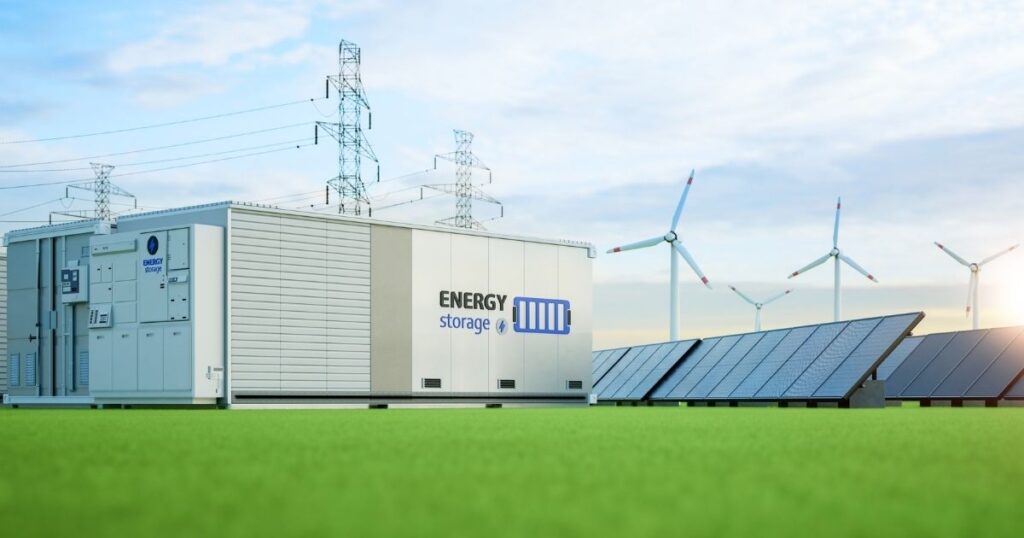
As energy storage adoption accelerates across industries, Energy Storage Systems (ESS) and Battery Energy Storage Systems (BESS) are increasingly deployed in both marine and industrial environments. While the core battery technology may appear similar, Marine ESS and Industrial ESS differ significantly in design, standards, and operational requirements.
Understanding these differences is essential when specifying the right system for your application.
What Is a Marine Energy Storage System (Marine ESS)?
A Marine ESS is a battery energy storage system specifically engineered for use onboard vessels or offshore platforms. These systems support electric propulsion, hybrid propulsion, auxiliary power, and peak shaving while meeting stringent maritime safety and classification requirements.
Key Characteristics of Marine ESS:
- Designed for vibration, shock, and motion
- Operates in high humidity and corrosive environments
- Requires marine classification compliance
- Integrated with propulsion and onboard power systems
- Emphasis on redundancy and safety at sea
Marine ESS plays a critical role in enabling zero-emission port operations, reducing fuel consumption, and improving vessel efficiency.
What Is an Industrial Energy Storage System (Industrial ESS / BESS)?
An Industrial ESS or BESS is typically deployed onshore to support factories, ports, utilities, and infrastructure facilities. These systems focus on energy optimization, backup power, renewable integration, and grid support.
Key Characteristics of Industrial ESS:
- Stationary installation (indoor or containerized)
- Designed for continuous duty cycles
- Integrated with grid, generators, or renewable sources
- Focus on cost optimization and energy efficiency
- Compliance with electrical and industrial safety standards
Industrial BESS solutions are widely used for peak shaving, load management, backup power, and microgrid applications.
Marine ESS vs Industrial ESS: Core Differences
1. Environmental Conditions
Marine ESS must withstand salt mist, vibration, inclination, and temperature fluctuations, whereas industrial ESS operates in relatively stable onshore environments.
2. Safety & Standards
Marine ESS systems require additional safety layers, including fire suppression, redundancy, and compliance with marine regulations. Industrial ESS focuses on electrical and fire safety within fixed installations.
3. Integration Complexity
Marine ESS integrates directly with propulsion systems, vessel power distribution, and automation, while industrial ESS integrates with grid infrastructure, EMS, and renewable generation.
4. Operational Objectives
- Marine ESS: Emission reduction, propulsion efficiency, silent operation
- Industrial ESS: Cost reduction, energy optimization, power reliability
Why the Right ESS Selection Matters
Selecting the wrong type of ESS can lead to:
- Increased operational risk
- Compliance issues
- Reduced system life
- Higher lifecycle costs
A properly engineered ESS ensures reliability, safety, performance, and long-term value, whether deployed at sea or on land.
Advandyn’s Approach to ESS Solutions
Advandyn delivers application-specific Energy Storage Solutions, focusing on:
- Marine ESS for vessels and offshore applications
- Industrial, Coastal, and Utility ESS for onshore infrastructure
- Modular, scalable, and integration-ready architectures
- Solutions aligned with Middle East operating conditions
Our focus is on engineering-led ESS deployment, supported by proven technology partnerships.
Conclusion
While Marine ESS and Industrial ESS share common battery technology, their design philosophy, standards, and applications are fundamentally different. Understanding these differences is key to achieving safe, efficient, and sustainable energy storage performance.
Talk to Our Engineering Team
If you are evaluating Marine ESS or Industrial BESS for your project, our team is ready to support you.