
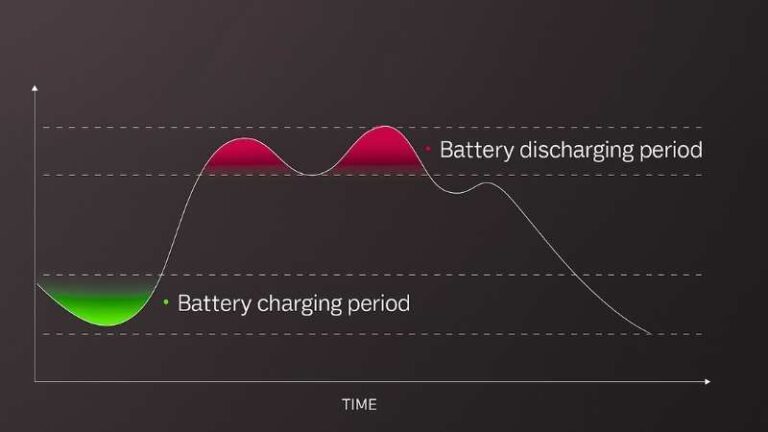
Marine vessels operate under highly dynamic load conditions. Rapid power fluctuations during maneuvering compilations, dynamic positioning, towing, or acceleration often force generators to run inefficiently or require multiple engines online. Peak shaving using Battery Energy Storage Systems (Marine BESS / Marine ESS) has emerged as an effective solution to optimize vessel power systems while reducing fuel consumption and emissions.
This article explains how peak shaving works in marine vessels, the technical benefits of using Marine ESS, and why it is particularly relevant for vessels operating in the Middle East.
What Is Peak Shaving in Marine Applications?
Peak shaving refers to the practice of using a battery system to supply short-duration high-power demand, instead of ramping up additional generators. The battery absorbs sudden load spikes, allowing generators to operate at steady and efficient load levels.
In marine vessels, peak demand events typically occur during:
- Harbor maneuvering
- Acceleration and deceleration
- Thruster operation
- Crane or winch operation
- Dynamic positioning (DP)
Marine ESS is ideally suited to handle these transient loads.
Why Peak Shaving Matters for Marine Vessels
Traditional marine power systems are designed to handle worst-case peak loads. This often results in:
- Oversized generators
- Low-load engine operation
- Increased fuel consumption
- Higher emissions
- Accelerated engine wear
Peak shaving allows vessels to be designed and operated around average load requirements, improving overall system efficiency.
Role of Battery Energy Storage in Peak Shaving
Marine BESS functions as a fast-response energy buffer. When a load spike occurs:
- The battery instantly supplies additional power
- Generators continue operating at optimal load
- The battery recharges once peak demand subsides
This process happens automatically through the vessel’s Power Management System (PMS) and Energy Management System (EMS).
Fuel Efficiency and Emission Reduction
One of the most significant benefits of peak shaving is improved fuel efficiency. Engines operating at low loads burn fuel inefficiently and produce higher emissions per unit of energy.
By maintaining optimal generator loading, Marine ESS enables:
- Reduced fuel consumption
- Lower CO₂ emissions
- Reduced NOₓ and particulate emissions
- Improved compliance with port emission regulations
This is particularly valuable for vessels with frequent port calls or intermittent high-power demand.
Reduced Generator Count and Engine Wear
Peak shaving allows vessels to:
- Operate with fewer generators online
- Avoid frequent generator start-stop cycles
- Reduce mechanical stress on engines
As a result, maintenance intervals are extended, engine lifespan is increased, and overall operational reliability improves.
Applications of Peak Shaving in Marine Vessels
Peak shaving using Marine BESS is widely applied in:
- Tugboats and harbor craft
- Offshore support vessels
- Dynamic positioning vessels
- Ferries and passenger vessels
- Workboats and service vessels
These vessel types experience frequent load fluctuations, making them ideal candidates for battery-assisted peak shaving.
Integration with Marine Power Management Systems
Effective peak shaving depends on seamless integration between:
- Battery Management System (BMS)
- Power Management System (PMS)
- Energy Management System (EMS)
The control system continuously monitors load demand, generator capacity, and battery state of charge to ensure safe and efficient operation.
Proper system integration is essential for classification approval and operational safety.
Middle East Operating Considerations
Marine vessels operating in the Middle East face:
- High ambient temperatures
- Continuous duty cycles
- Increasing environmental regulations in ports
Peak shaving with Marine ESS helps address these challenges by:
- Reducing thermal stress on generators
- Improving operational efficiency in hot climates
- Supporting sustainability initiatives in regional ports
Battery systems combined with robust thermal management are particularly effective in these conditions.
Impact on System Design and Economics
Implementing peak shaving can influence:
- Generator sizing and redundancy strategy
- Fuel storage requirements
- Maintenance planning
- Total cost of ownership (TCO)
Although Marine ESS adds initial capital cost, fuel savings and reduced maintenance often deliver attractive lifecycle economics, especially for high-utilization vessels.
Conclusion
Peak shaving using Battery Energy Storage Systems is a proven and practical application of Marine ESS. By absorbing short-duration power peaks, batteries enable more efficient generator operation, reduced fuel consumption, lower emissions, and improved vessel reliability.
As marine operators increasingly focus on efficiency and sustainability, peak shaving with Marine BESS is becoming a standard design feature in modern marine power systems.
If you are assessing Marine ESS or Marine BESS solutions for peak shaving applications, or planning a hybrid vessel project, you may contact us [email protected] to discuss technical options and system design considerations.