
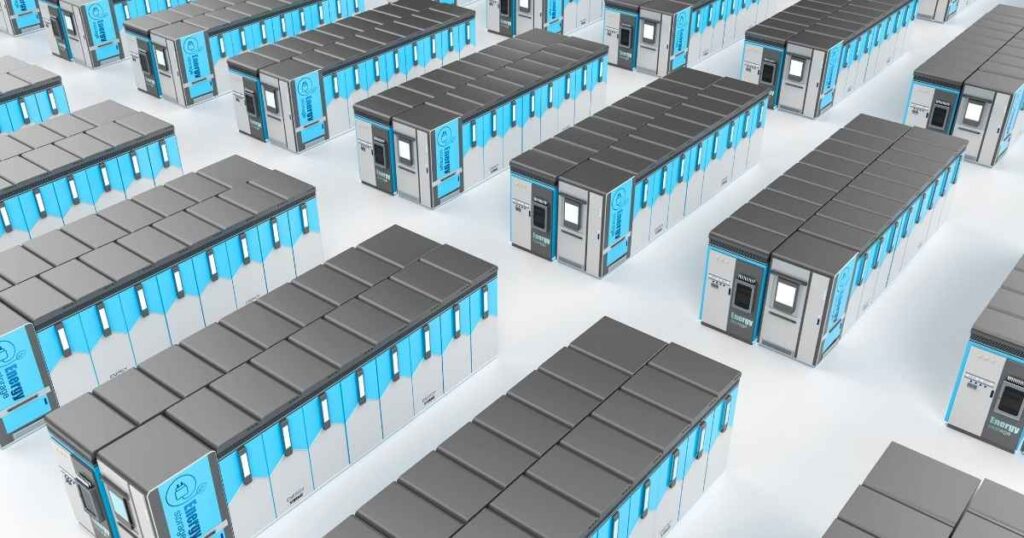
Battery Energy Storage Systems (ESS) have become critical infrastructure across marine, industrial, and utility sectors. As ESS capacity and deployment scale increase, safety architecture is no longer optional—it is fundamental.
Modern ESS safety design is a multi-layered engineering discipline, combining cell chemistry selection, battery management systems, thermal control, mechanical protection, and system-level integration.
This article explains how modern ESS safety architecture is structured, why it matters, and what stakeholders should evaluate when deploying ESS or BESS solutions.
Why ESS Safety Architecture Is Critical
ESS installations store large amounts of electrical energy in confined spaces. Without proper design, risks may include:
- Thermal runaway
- Fire propagation
- Electrical faults
- Mechanical damage
- Environmental exposure
Safety architecture ensures fault prevention, early detection, and controlled mitigation, protecting personnel, assets, and operations.
Layer 1: Cell Chemistry & Module Design
Safety starts at the cell level.
Key considerations:
- Selection of stable lithium chemistries (e.g., LFP for higher thermal stability)
- Robust internal separators and cell construction
- Controlled energy density vs safety trade-off
- Factory quality assurance and traceability
Well-engineered ESS solutions prioritize cell consistency and predictability, reducing the probability of internal failure.
Layer 2: Battery Management System (BMS)
The Battery Management System is the brain of ESS safety.
Core BMS functions:
- Continuous voltage monitoring (cell and module level)
- Temperature monitoring at multiple points
- State of Charge (SoC) and State of Health (SoH) estimation
- Over-voltage, under-voltage, over-current protection
- Active and passive cell balancing
- Fault detection and isolation
Modern ESS platforms often use multi-tier BMS architecture:
- Cell / module BMS
- Rack-level BMS
- System-level BMS
This redundancy ensures fail-safe operation even if one layer fails.
Layer 3: Thermal Management Systems
Temperature control is one of the most critical safety factors in ESS.
Thermal strategies include:
- Air-cooled systems for lower-density installations
- Liquid cooling for high-power or marine environments
- Controlled airflow and heat dissipation paths
- Hot-spot detection and thermal zoning
Proper thermal design prevents:
- Localized overheating
- Accelerated degradation
- Thermal runaway propagation
In marine and Middle East environments, ambient temperature resilience is a key design requirement.
Layer 4: Electrical Protection & Isolation
Modern ESS incorporate advanced electrical protection mechanisms.
Typical safety elements:
- DC contactors and circuit breakers
- Pre-charge circuits to prevent inrush currents
- Ground fault detection
- Isolation monitoring
- Emergency shutdown systems
These components ensure faults are contained and isolated, preventing cascading system failures.
Layer 5: Mechanical & Structural Safety
ESS installations must withstand mechanical stress.
Mechanical safety features include:
- Fire-resistant enclosures
- IP-rated cabinets for dust, humidity, and corrosion
- Vibration-resistant mounting (critical for marine ESS)
- Blast relief or pressure venting mechanisms
In marine ESS, structural design must also account for:
- Shock loads
- Vessel motion
- Saltwater corrosion
Layer 6: Fire Detection & Suppression
While prevention is the priority, mitigation systems are essential.
Fire safety measures may include:
- Smoke and gas detection
- Temperature-based fire sensors
- Integrated fire suppression systems
- Compartmentalization to prevent fire spread
The goal is controlled containment, not just suppression.
Layer 7: System Integration & Control
Safety does not end at the battery.
ESS must integrate safely with:
- Power management systems (PMS)
- Inverters and converters
- Grid or generator interfaces
- Propulsion or industrial loads
Poor integration can introduce risks even in high-quality battery systems. A well-engineered ESS considers system-level behavior, not just individual components.
Compliance, Standards & Engineering Practices
Modern ESS safety architecture typically aligns with:
- International electrical standards
- Marine classification requirements (for marine ESS)
- Industrial safety norms
- Local authority and utility regulations
However, standards alone are not enough. Real-world safety depends on:
- Proper system sizing
- Conservative design margins
- Correct installation and commissioning
- Operational training and monitoring
Safety Is a System, Not a Feature
Modern ESS safety is not a single component or certification.
It is the result of layered engineering, where each safety mechanism supports the others.
From cell chemistry to system integration, a robust ESS safety architecture:
- Protects assets and people
- Ensures long-term reliability
- Builds trust with operators and authorities
- Enables ESS deployment at scale
Final Thoughts
As ESS and BESS deployments continue to grow across marine, industrial, and utility sectors, safety architecture will define the success or failure of projects.
Stakeholders evaluating energy storage solutions should look beyond capacity and pricing—and focus on engineering depth, integration capability, and safety philosophy.
 Want to discuss ESS safety architecture for your project?
If you’re evaluating ESS or BESS solutions for marine, industrial, or utility applications, our team can support technical discussions and system planning.
