
The Missing Piece of the Green Energy Puzzle: Meet the BESS
Imagine it’s a beautiful, sunny Tuesday at noon. Solar panels across the region are cranking out massive amounts of clean electricity—more than homes and businesses can actually use at that moment.
Now, fast forward to 7:00 PM that evening. The sun has set. People are coming home, turning on ovens, TVs, and air conditioners. Energy demand spikes, but those solar panels are now dormant.
This scenario is the fundamental challenge of the renewable energy transition. We have figured out how to generate clean power cheaply, but we haven’t always been able to generate it when we need it.
Until now.
Enter the Battery Energy Storage System, commonly known as BESS. It’s a technology that is rapidly changing the way the world uses power, acting as the critical bridge between clean energy generation and reliable energy usage.
But what exactly is it, and why is everyone in the energy sector talking about it?
What is a BESS? (The Simple Version)
At its core, a Battery Energy Storage System is exactly what it sounds like: a technology designed to store electrical energy so it can be used later.
Think of it like a water tower for electricity. We pump water (electricity) up into the tower when we have an excess supply. Later, when everyone turns on their taps at once and demand is high, we open the valves and let that stored water flow down.
A BESS does the same thing using advanced chemistry instead of gravity.
However, a BESS is much smarter than a standard rechargeable battery. It isn’t just a box of lithium-ion cells. It’s an intelligent ecosystem that includes cooling systems, safety monitors, and sophisticated software that decides the exact nanosecond to absorb power from the grid and the exact moment to release it back.
Why Do We Need BESS Right Now?
As we move away from fossil fuels (which we can burn whenever we want) toward renewables (which depend on the weather), BESS becomes essential. Here are the three main jobs it does:
1. Solving the “Sun Doesn’t Shine at Night” Problem
This is the biggest driver for BESS adoption. To make a grid run on 100% wind and solar, you need a way to save the excess energy generated at 1:00 PM so you can use it at 8:00 PM. BESS “firm’s up” renewable energy, making unpredictable sources reliable 24/7.
2. Energy Independence and Backup Power
On a smaller scale—like in a residential home—a BESS (such as a Tesla Powerwall or similar competitors) means security. If the main grid goes down due to a storm, the BESS instantly detects the outage and switches your home to battery power in a fraction of a second. Your lights stay on while the rest of the street goes dark.
3. Saving Money (Energy Arbitrage)
This is where BESS gets clever. Many utility companies charge more for electricity during “peak hours” (usually early evening) and less during the middle of the night. Intelligent BESS software can charge the batteries when electricity is dirt cheap at 3:00 AM, and then discharge that cheap power to run your home during expensive peak hours. It’s the classic “buy low, sell high” strategy applied to your electric bill.
The Future is Stored
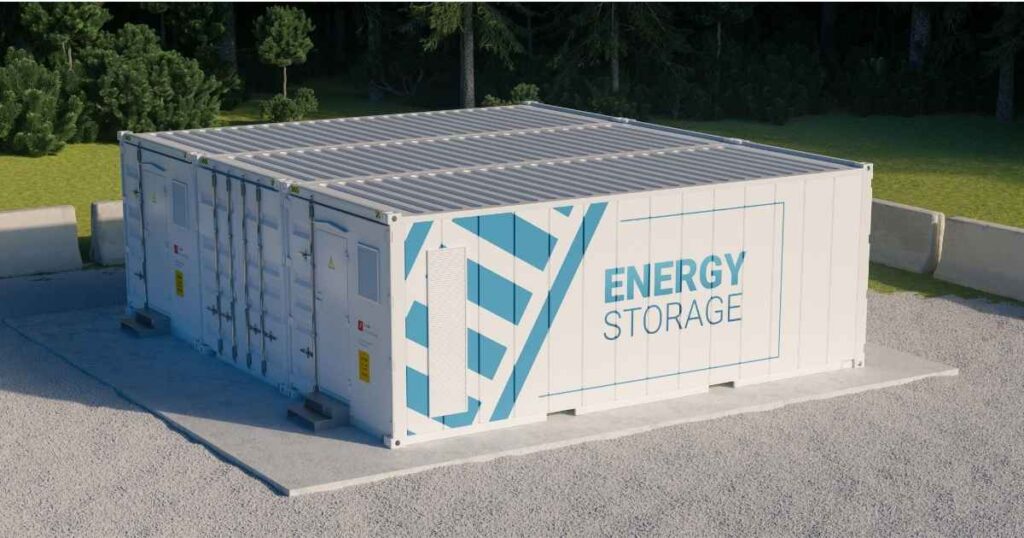
Battery Energy Storage Systems are no longer futuristic technology. They are being actively deployed right now, from small units in garages to massive, shipping-container-sized projects that stabilize entire city grids.
If solar panels and wind turbines are the engines of the green energy revolution, BESS is the fuel tank. We can’t get to a sustainable, net-zero future without it.
Stay ahead of the energy curve. The energy landscape is changing fast. Contact our team today for a free consultation.